

Distress tolerance is a person’s ability to manage actual or perceived emotional distress. It also involves being able to make it through an emotional incident without making it worse.
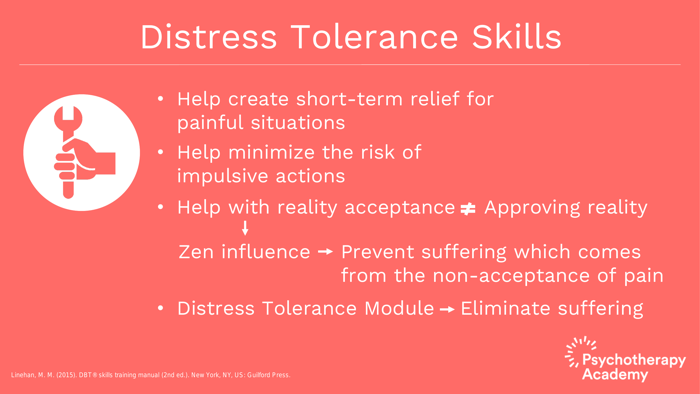
Distress tolerance skills will also help create short-term relief for painful situations. They help to minimize the risk of impulsive actions that come as a result of the desire to alleviate the pain that an individual is in during a crisis.
This includes feelings such as irritation, agitation, frustration, disgust, jealousy, anger, rage and hatred.
Distress tolerance is connected to emotional regulation but has a different focus. Good emotion regulation skills may reduce the intensity of painful feelings that are experienced in response to painful events, while poor emotion regulation skills may contribute to higher intensity of distress.
Copyright © 2024 Elements

 (866) 542-2252